When did we stop being curious about how recruitment works?
After 16 years in talent acquisition, I'm questioning why we sometimes struggle to turn professional knowledge, new ideas and good intentions into better hiring practices.
One of the things I've always enjoyed most about this profession is the opportunity to learn. Maybe a rather in depth review of this can be read in my article called 🔗 "AI isn't killing recruitment. Recruitment might be doing that itself". But this article is more focused on what I learnt about this from running Germany’s largest Talent Acquisition community.
Over the years, I've worked closely with scientists, engineers (not only software), product managers, designers, data scientists and senior business leaders, and those relationships have shaped how I think about my own profession.
I've always found it (mega) stimulating to work with people who question assumptions, examine evidence and look for better ways of solving problems. Of course, no profession consistently lives up to those ideals, but I've often wondered why we don't bring more of that curiosity into our own work in talent acquisition.
Because despite the progress our profession has made, I still encounter familiar problems in how organisations define roles, assess candidates, work with hiring managers and measure recruitment effectiveness.
We have access to more research, technology, professional networks and learning opportunities than at any previous point in my career. Yet some practices seem remarkably resistant to change.
And I find myself asking why.
🧠 Why does recruitment knowledge so often fail to change hiring practices?
Talent acquisition isn't short of new ideas. There are excellent practitioners doing meaningful work in structured interviewing, talent intelligence, recruitment operations, workforce planning and the responsible application of AI.
There are also well-established practices supported by years of research which still aren't applied consistently.
Structured interviewing is a good example. Most experienced recruiters understand the importance of defining assessment criteria, asking relevant questions and evaluating candidates against consistent standards.
Yet I've encountered organisations where interviewers assess overlapping competencies, hiring managers enter conversations without clear responsibilities and decisions rely on loosely defined impressions rather than evidence.
The problem isn't necessarily that people don't know what good interviewing looks like, I think it i more that…knowing and implementing are different things.
I've worked on projects involving interview frameworks, scorecards and hiring process improvements, and the challenging part is rarely explaining why an approach is useful. It's getting stakeholders to agree on what good looks like, change established habits and apply the new approach consistently.
That requires more than sharing an article, attending a webinar or completing a training session. It requires practical implementation, reinforcement and a willingness to examine whether the changes produce better outcomes.
I think we need to become more interested in what happens after the learning.
⏳ Are recruiters too busy to improve recruitment?
Recruitment is often reactive, and I don't think we acknowledge this enough when discussing professional development.
Hiring priorities change, vacancies need filling, stakeholders expect updates and candidates require attention. When teams are measured primarily on delivery (you should read our article on recruiter "productivity"), finding time to question the effectiveness of the entire system becomes difficult.
This isn't an individual problem. Leaders influence whether recruiters have time to develop their expertise, permission to experiment and the authority to change established processes. But I also don't believe organisational constraints remove our individual responsibility to remain curious.
There's a difference between working in an environment which makes improvement difficult and becoming comfortable with never questioning the way things are done.
For example, when a hiring manager says the candidate market is weak, how often do we examine what this means?
Is there genuinely a shortage of people with the required capabilities? Are expectations unrealistic? Is compensation competitive? Is the assessment process rejecting suitable candidates? Are we confusing a lack of familiar profiles with a lack of relevant skills?
Similarly, when recruitment takes too long, the answer isn't automatically to ask recruiters to work faster. We need to understand where decisions are delayed, whether interview stages provide useful information and how stakeholders contribute to the process.
These aren't revolutionary ideas (i HOPE!). They're examples of professional curiosity applied to everyday work.
And I believe this is what distinguishes someone who executes a recruitment process from someone who helps an organisation improve its hiring capability.
🤖 Is AI making recruitment better or simply faster?
Artificial intelligence has made this conversation more urgent.
LinkedIn's 2025 Future of Recruiting report found that 37% of surveyed organisations were experimenting with or actively integrating generative AI into recruitment, compared with 27% the previous year. Its January 2026 research also reported that 93% of surveyed recruiters planned to increase their use of AI during the year.
These figures challenge any suggestion that recruiters are generally uninterested in technology.
But they also raise a more important question: what are we trying to improve?
Using AI to write job descriptions, summarise notes or automate administrative tasks might save time. Those improvements have value, particularly when they allow professionals to concentrate on more complex work.
But faster execution doesn't automatically mean better recruitment.
If an organisation has poorly defined roles, inconsistent assessment criteria or ineffective hiring decisions, automating parts of the existing process might make it more efficient without addressing the underlying weaknesses.
I'd rather see talent acquisition teams begin by identifying the problem they want to solve.
Are we trying to improve hiring decisions, reduce unnecessary interview stages, understand workforce capabilities or improve candidate communication?
Once the problem is clear, we have a stronger basis for deciding whether AI, process redesign, better data or a change in stakeholder behaviour is the appropriate response.
Adopting technology demonstrates a willingness to try something new. Demonstrating that it improves outcomes is a more meaningful measure of progress.
🤝 What does it take for talent acquisition to become a strategic business partner?
Another issue I've encountered throughout my career is the gap between describing talent acquisition as a strategic function and giving practitioners the capabilities and influence required to operate strategically.
We talk frequently about becoming trusted advisers to the business, but what does that mean in practice?
For me, it begins with understanding what an organisation is trying to achieve and how hiring decisions contribute to those objectives.
If a business leader requests ten additional engineers, a strategic talent partner should understand the problem behind the request. What needs to be delivered? Which capabilities are missing? What alternatives have been considered? How urgent is the requirement, and what trade-offs is the organisation prepared to make?
Sometimes external hiring is the right answer. Sometimes the organisation needs to develop existing employees, redesign responsibilities or reconsider how work is distributed.
Our role isn't to challenge every hiring request for the sake of appearing strategic. It's to contribute expertise which helps stakeholders make better decisions.
This requires commercial understanding, data literacy, stakeholder management and the confidence to communicate recommendations which aren't always what hiring managers initially want to hear.
Those capabilities don't develop because we change someone's job title from recruiter to talent partner. They require learning, practical experience and opportunities to work on problems beyond individual vacancies.
🌍 What building Talent Crunch has taught me about professional curiosity
One reason I started Talent Crunch was to create more opportunities for professionals to exchange knowledge, challenge assumptions and learn from one another.
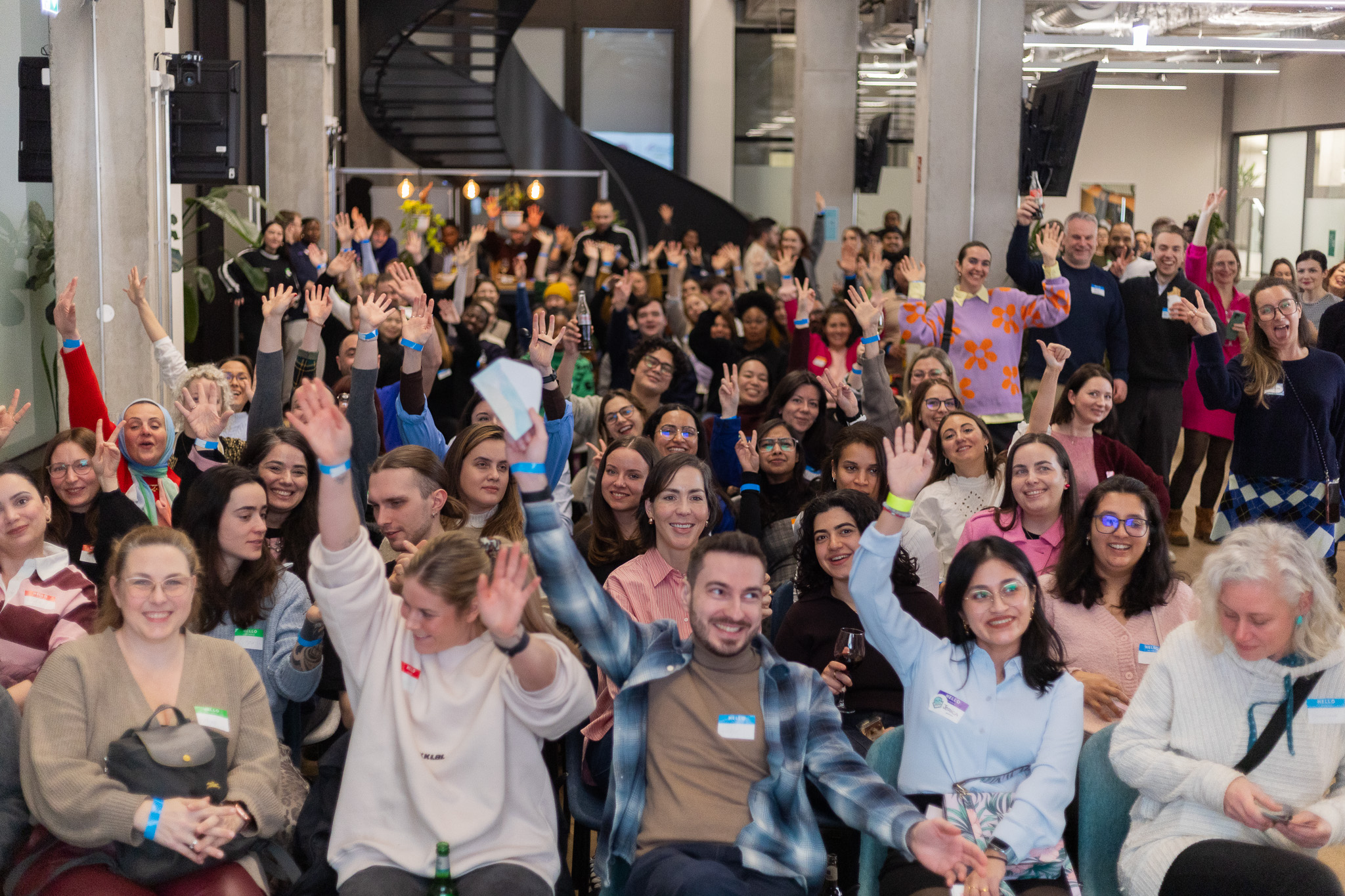
I've met practitioners who are thoughtful, generous with their expertise and genuinely committed to improving their work. Some of the most valuable conversations I've experienced have involved people openly discussing what they've tried, what worked and what they would approach differently.
But building the community has also forced me to examine my own expectations.
I sometimes find myself wondering why certain topics attract immediate interest while others, which I consider fundamental to improving our profession, receive less attention.
I've had to recognise that my enthusiasm for a subject doesn't automatically establish its relevance to someone else.
People have different responsibilities, experiences and immediate challenges. Someone who doesn't attend a discussion isn't necessarily uninterested in learning, and someone who doesn't engage publicly might be developing their expertise in ways I never see.
This has been an important correction to my own thinking.
Rather than treating participation as a measure of professional curiosity, I want to understand which problems people are trying to solve and how learning fits into their working lives.
It also influences how I want to develop Talent Crunch. A discussion about recruitment productivity should help people examine specific operational problems. A conversation about AI should create space to compare implementations and results. And a session about strategic talent acquisition should help participants translate broad ambitions into practical decisions.
I want professional learning to feel useful, relevant and connected to the challenges people face, rather than becoming another collection of interesting ideas which never influence how we work.
🌱 How do we turn continuous learning into better recruitment outcomes?
I don't think the answer is simply to attend more conferences, collect more certificates or follow every new development in recruitment technology.
Those activities have value, but they're not substitutes for applying what we learn.
For me, meaningful professional development involves a few habits:
Start with the problem. Before introducing a new tool or methodology, understand what isn't working and why (nothing revolutionary, right?)
Test ideas in practice. Redesign one interview stage, pilot a new approach or improve a specific process, then examine the results.
Learn more about the business. Spend time understanding how stakeholders work, what they're trying to achieve and which capabilities their organisations need.
Share what you've learnt. Talk openly about successful approaches, unsuccessful experiments and decisions you'd make differently - this allows others to also share their experiences, and this is a great way for us all to learn from each other
Make improvement part of the job. Leaders need to give teams the time, support and accountability required to improve how recruitment works, rather than treating learning as an optional extra.
None of these ideas is particularly complicated, but consistently applying them requires discipline, organisational support and the willingness to question familiar habits.
🔭 What should we expect from the future of talent acquisition?
I've spent enough time in talent acquisition to recognise how demanding the profession is, and I've worked with enough outstanding practitioners to know how much expertise exists within it.
My frustration isn't with the idea that recruiters lack intelligence, ambition or commitment. I know too many people whose work contradicts those assumptions.
What concerns me is the distance which sometimes develops between what we know about effective hiring and what organisations consistently put into practice.
It's a gap which deserves attention, especially as technology changes how work is performed and businesses reconsider the capabilities they need.
I also recognise that I've contributed to this problem in my own way. I've sometimes assumed that because I find a topic important, other people should immediately recognise its value. Building Talent Crunch has challenged me to become better at understanding different perspectives and creating learning opportunities which connect with real professional needs.
That doesn't mean I want to become less demanding of our profession.
I want us to be more ambitious about the quality of our work, more willing to question assumptions and more rigorous about understanding whether our decisions produce better outcomes.
After 16 years, I still find talent acquisition intellectually stimulating because there's always another problem worth understanding, another assumption worth challenging and another opportunity to improve how organisations hire.
But perhaps the question we should ask ourselves more often isn't "are we keeping up with the latest developments in recruitment?"
Maybe it is "Has anything in the way we work improved because of what we've learnt?"
❓ Frequently asked questions
1. Why do recruitment processes fail to improve even when teams know the best practices?
Knowing a best practice doesn't guarantee consistent implementation. Recruitment improvement requires clear ownership, stakeholder agreement, changes to existing workflows and ongoing evaluation. Without these, even well-established approaches such as structured interviewing might remain theoretical rather than becoming part of everyday hiring decisions.
2. How do recruiters become more strategic business partners?
Recruiters become more strategic by understanding business objectives, questioning the assumptions behind hiring requests and using evidence to advise stakeholders. This involves developing commercial knowledge, data literacy and the confidence to recommend alternatives to external hiring when appropriate.
3. How do talent acquisition teams create a culture of continuous learning?
Continuous learning becomes more effective when teams connect development activities to real recruitment problems. Leaders should provide time to experiment, encourage knowledge-sharing and evaluate whether new approaches improve hiring outcomes.
4. Does using AI automatically improve recruitment effectiveness?
No. AI might reduce administrative work or support recruitment workflows, but efficiency doesn't automatically improve hiring decisions. Teams should assess AI tools against accuracy, fairness, candidate experience, human oversight and measurable outcomes.
5. What is the difference between recruitment activity and recruitment improvement?
Recruitment activity focuses on executing tasks such as sourcing candidates, conducting interviews and filling vacancies. Recruitment improvement examines whether those activities are effective and how they should change to produce better outcomes.
✍️ About the author
Andreea Lungulescu is a Principal Talent Acquisition Partner, consultant and founder of Talent Crunch, a professional community for talent acquisition and people professionals. With 16 years of international recruitment experience, including roles at Zalando and Wayfair, she specialises in structured hiring, talent acquisition operations, stakeholder advisory and improving recruitment practices.
📬 Improving hiring practices requires more than introducing another tool or training programme. Through The Principal Recruiter, I work with organisations on structured interviewing, talent acquisition operations and practical improvements to hiring processes.
If you're reviewing how your organisation hires, I'd welcome a conversation.

Founder of The Principal Recruiter. 16+ years in talent acquisition. Building stronger hiring systems worldwide.
Keep reading

AI isn't killing recruitment. Recruitment might be doing that itself

The hidden cost of building a community: What generosity, ADHD and entrepreneurship taught me about sustainability