AI in Talent Acquisition: What Gets Automated, What Stays Human (But Better)
A short, practical lens on how AI is reshaping recruiting work , for both entry-level and senior recruiters , and the human skills that matter more than ever.
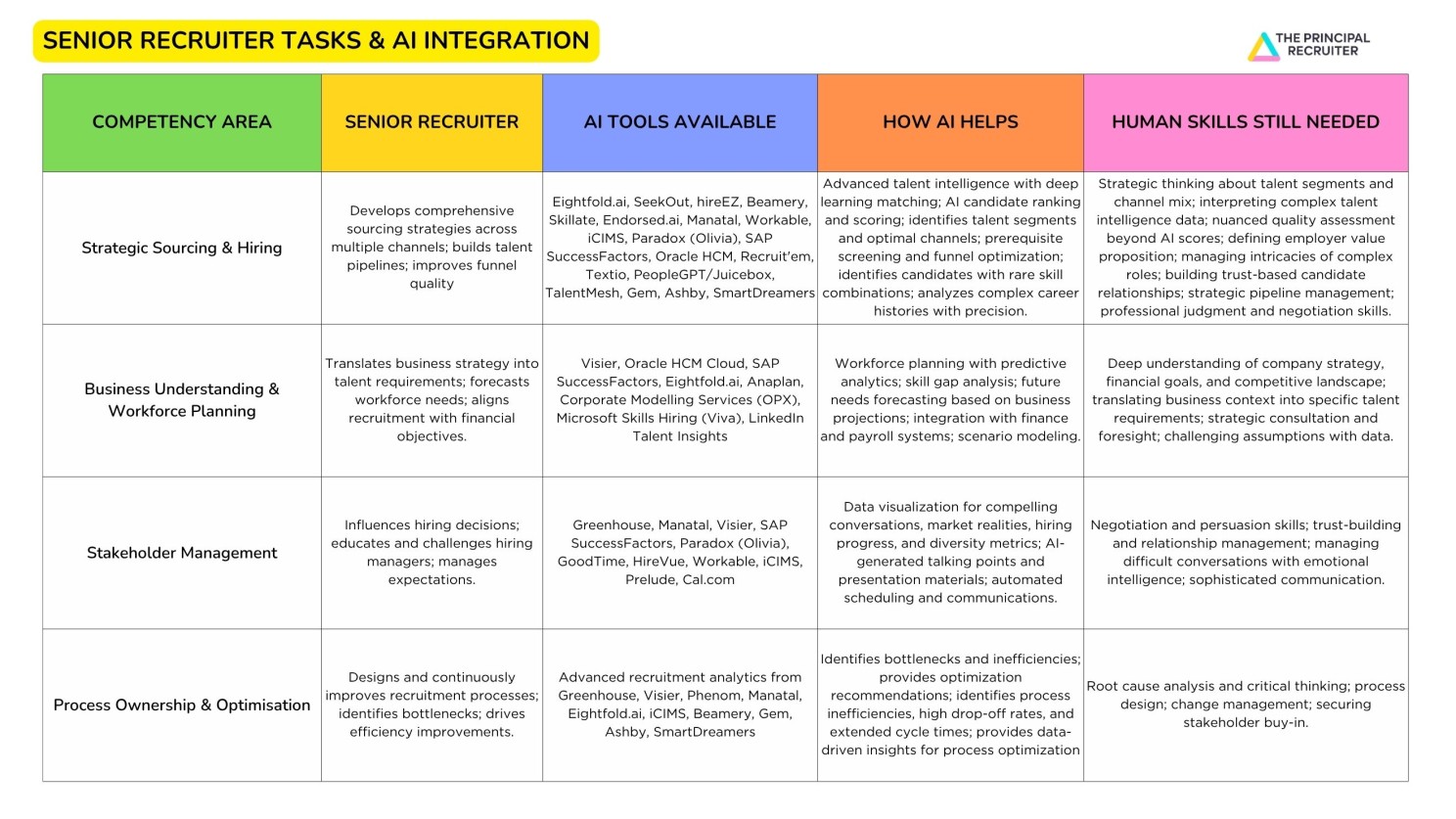
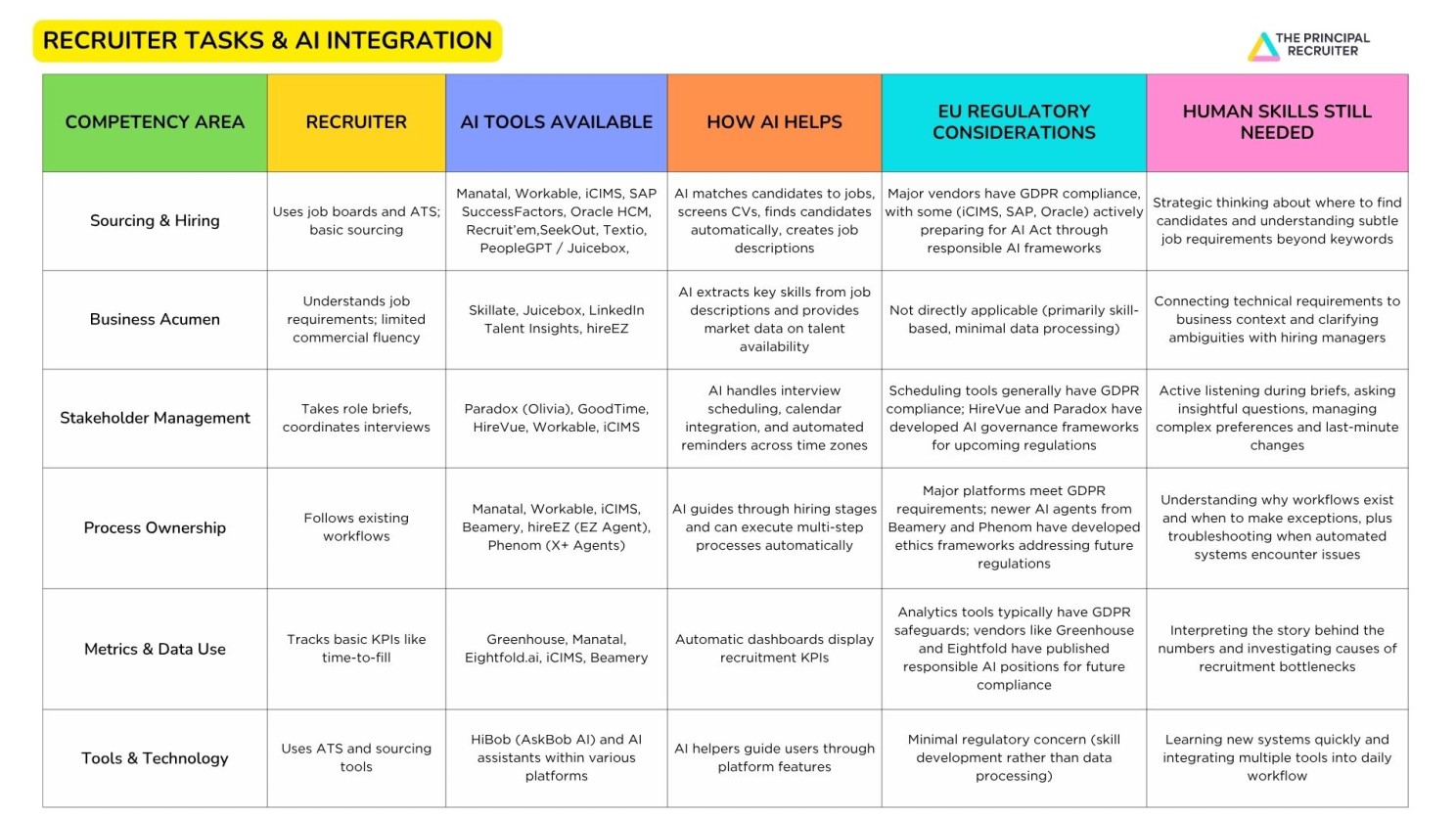
This is a short version of two extensive articles I wrote on the matter. Read the complete in-depth analysis with detailed tool breakdowns and compliance frameworks on my website. The photos here are snippets, you can download them in full on the website as well.
AI for Recruiters in 2025: What Gets Automated, What Stays Human
AI for Senior Recruiters in 2025: What Gets Automated, What Stays Human
Entry-level recruiters used to spend 80% of their time on admin. Automation tools, or AI, now handle resume screening, interview scheduling, and a lot of the candidate comms & more.
What's left? Well… figuring out where to find the right people, understanding what businesses really need beyond job descriptions, and building relationships that last.
Senior recruiters have it even better. AI gives you workforce planning data that would have taken weeks to compile. Market intelligence that's actionable. Analytics that show you where your process breaks down.
Having data isn't the same as knowing what to do with it.
However… every HR Tech out there today promises the same thing: "automate everything is the way to go". Eye roll.
In my eyes, the real transformation of our profession (and others) is about elevation, augmentation and yes, then automation on top, sure.
When proper tools handle the mundane, recruiters move up the value chain. Junior recruiters start thinking strategically. Senior recruiters become business consultants. The work becomes more interesting, not less human.
Take sourcing for example. AI can find candidates matching keywords, but it can't figure out that the "5 years experience" requirement is actually negotiable for the right cultural fit. That takes judgment.
Or stakeholder management. AI can show you data proving that demanding the proverbial "unicorns" is unrealistic. But it can't navigate the conversation where you explain this to a difficult hiring manager without destroying the relationship.
The compliance piece
Under the EU AI Act, candidate selection systems are high-risk. Human oversight is mandatory. The companies treating AI as a black box are building compliance nightmares.
Smart recruiters see this as an opportunity. While competitors stumble through regulatory requirements, you become the expert who understands both the technology and the law.
Humans in the loop (a new darling buzzword in the scene)
Stop worrying about AI taking your job. Start developing the skills that make you irreplaceable:
Data interpretation, can you spot patterns in hiring data that suggest problems three months out? (If not, there are tools which can do it for you, so better watch out.)
Strategic thinking, when AI shows you talent shortage data, can you design sourcing strategies that others haven't considered?
Influence without authority in a data-rich environment. Can you use insights to change how hiring managers think about their requirements?
So what?
For entry-level recruiters
AI automates resume screening, interview scheduling, and basic candidate communication.
Your value shifts to strategic thinking about sourcing channels and relationship building.
Critical thinking becomes essential when automated systems encounter exceptions.
Understanding compliance requirements (GDPR, EU AI Act) is now mandatory.
For senior recruiters
AI provides sophisticated talent intelligence and workforce planning data.
Your role evolves into strategic interpretation of complex datasets.
Stakeholder management becomes more data-driven but requires stronger negotiation skills.
You become the bridge between AI insights and actionable business strategy.
What human skills matter more & more
The skills that distinguish great recruiters haven't changed so much if you ask me, it's just maybe high time that we ACTUALLY do something about them.
Strategic thinking, connecting technical requirements to business context.
Data interpretation, moving beyond basic metrics to hypothesis testing.
Relationship building, trust and empathy remain irreplaceable.
Critical evaluation, understanding AI limitations and potential biases.
Change management, leading tool adoption and process innovation.
What you need to do
Immediately
Understand which AI tools your organisation uses and their capabilities.
Develop hypothesis-testing skills for data analysis.
Build knowledge of compliance requirements.
Focus on relationship and negotiation skills.
For career progression
Think like a process designer, not just a task executor.
Learn to translate AI insights into business strategy.
Develop change management capabilities.
Build expertise in stakeholder influence.
Need help building (AI) capabilities that actually drive results?
I work with companies implementing compliant recruitment strategies and with individuals developing these critical skills. If you want to move beyond the hype and build competitive advantage, let's talk.

Founder of The Principal Recruiter. 16+ years in talent acquisition. Building stronger hiring systems worldwide.